Avoiding Unnecessary HVAC Recommendations: A Homeowner’s Guide
Few things frustrate a homeowner faster than a service call that turns into a shopping list. You schedule an HVAC visit because the house feels warm upstairs, the air conditioner is short-cycling, or the furnace is making a noise you do not like. Then the technician starts talking about a blower motor, a thermostat upgrade, duct sealing, a new condenser coil, a new capacitor, maybe a whole system replacement, and by the end of the conversation you are no longer sure whether you have a repair issue or a sales appointment.
That reaction is not paranoia. It is experience. A well-run HVAC company should absolutely recommend work when the system needs it, but honest service looks very different from padded work orders and vague warnings. Homeowners do not need to become technicians, but they do need enough judgment to recognize when a recommendation is grounded in real evidence and when it seems built to inflate the ticket.
Avoiding unnecessary recommendations is not about distrusting every contractor. It is about understanding your system, asking the right questions, and knowing what good service looks like. The payoff is real. You spend less on avoidable repairs, avoid premature replacements, and reduce the chances of paying for work that never improves comfort. If you are already dealing with high HVAC bills, this matters even more. Rising utility costs and repeated service calls can quietly drain a household budget long before anyone starts thinking about a full system replacement.
Why HVAC recommendations sometimes go too far
There are honest reasons an HVAC technician may recommend more than you expected. A system can have one obvious failure and one hidden problem, or a repair may make short-term sense but not long-term sense. A capacitor might be weak, the coil may be dirty, and the blower motor may also be nearing the end of its life. On a hot day, the technician may see all three and try to prevent a callback.
But there is another side to it. Some recommendations are driven by sales incentives, broad assumptions, or a technician’s habit of replacing parts before proving they are actually bad. In the field, I have seen systems condemned because of a single uncomfortable symptom, when the real problem was a clogged filter, a failed relay, a thermostat placement issue, or restricted airflow from closed registers and dirty duct returns. I have also seen homeowners sold on expensive accessories that had almost nothing to do with the original complaint.
The difference between necessary and unnecessary recommendations often comes down to diagnostic discipline. A careful technician tests, measures, and explains. A pushy one jumps quickly from symptom to solution.
The most common signs a recommendation deserves a second look
A recommendation is not automatically wrong just because it is expensive. Some HVAC work is expensive because the parts are expensive, the labor is technical, and the system is physically large. Still, certain patterns should make a homeowner pause.
If the technician cannot explain how the problem was diagnosed, that is a red flag. “It looks old” is not a diagnosis. Neither is “I always recommend replacing this part when I see that symptom.” Good service ties the recommendation to specific readings, visible damage, or repeatable performance issues.
If a repair becomes a replacement without a clear reason, ask for the bridge between those two ideas. For example, a refrigerant leak in an older air conditioner may justify replacement if the coil is corroded and the system uses an obsolete refrigerant, but a single failed contactor does not automatically justify a new outdoor unit.
If the technician recommends several unrelated items at once, ask which one is urgent and which one is optional. A cracked heat exchanger, if confirmed, is a safety issue. A dirty blower wheel is not in the same category as a safety issue, even if it should still be cleaned.
And if the estimate leans heavily on fear rather than evidence, take a breath. Statements like “this could fail any minute” are not useless, but they should be backed by real measurements, not just urgency. HVAC systems do fail, but they usually give clues first. A competent technician should be able to show them.
What honest service usually sounds like
Honest service does not always sound polished. In fact, it often sounds a little plain. A good technician tends to speak in specifics. They may say the capacitor is reading below spec, the system is short on airflow, the evaporator coil is iced because the filter is collapsing, or the blower motor is pulling more amperage than it should.
That language matters because it gives you something to hold onto. You can ask follow-up questions. You can compare estimates from other companies. You can decide whether the recommendation fits your budget and the age of the equipment.
Honest service also includes restraint. A skilled contractor will sometimes say, “You do not need to replace that yet,” even when replacement could make the invoice bigger. That kind of judgment is valuable. It shows the technician is working from the condition of the equipment, not from a quota.
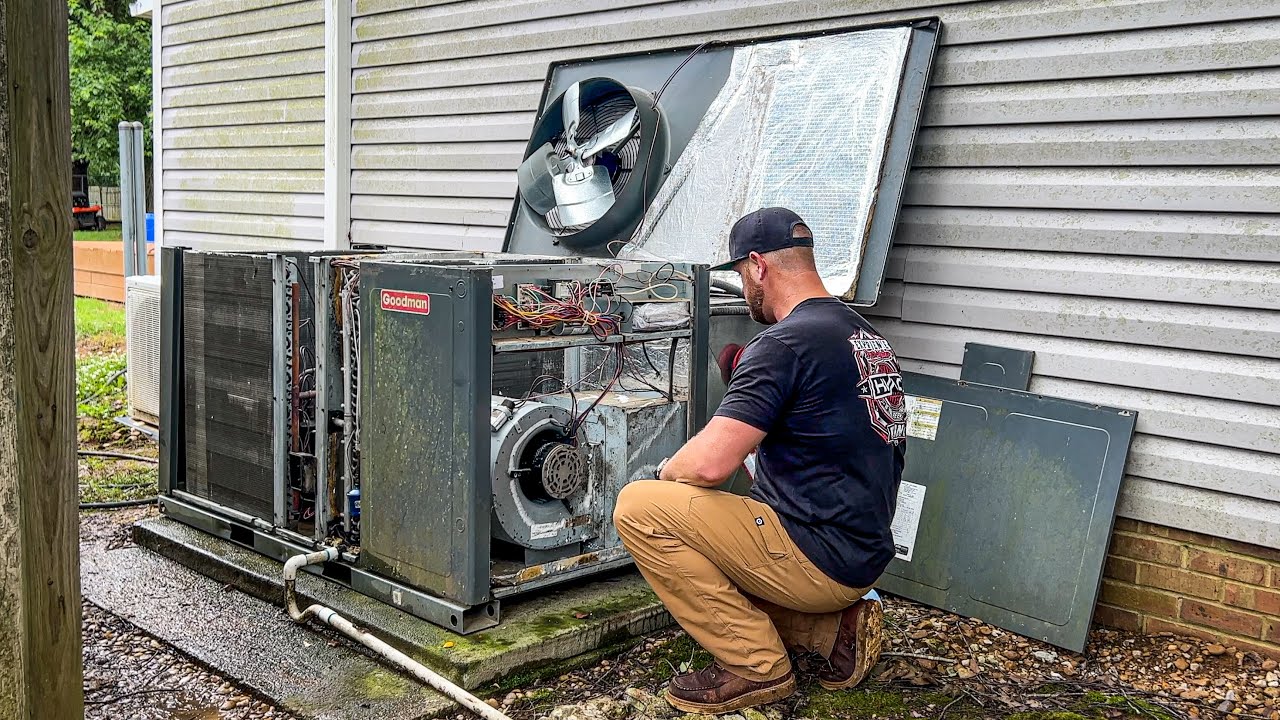
If you have ever heard a service professional tell you that a part is “probably okay, but I want to keep an eye on it,” that is often the sound of real experience. Systems do not always fit neat categories. Some parts can be borderline for years, especially if the system is not heavily used. The key is whether the recommendation is proportional to the evidence.
Questions that separate diagnosis from sales
You do not need to interrogate every technician, but a few plain questions can reveal a lot. Ask what they measured, what they saw, and what would happen if you did nothing for now. The answers should be understandable without requiring a degree in HVAC controls.
The best questions are direct and practical. Ask whether the issue is affecting safety, comfort, efficiency, or reliability. Ask whether the repair is likely to solve the specific symptom you noticed. Ask whether the same problem could be caused by something simpler, like airflow, thermostat settings, or a dirty component. Ask how long the fix should last and whether there is any chance the underlying issue is elsewhere.
This is one of the simplest ways to protect yourself from unnecessary recommendations. A professional who knows the system will answer those questions with confidence. Someone who is improvising will often shift into vague language, urgency, or unrelated upsells.
A useful test is to ask for the service reason in one sentence. If the technician cannot say, in plain language, why the recommended repair is needed, you probably need more information before approving it.
Common scenarios where homeowners get oversold
A lot of unnecessary HVAC work starts with a real problem that is then stretched into a bigger one. Dirty coils are a good example. Cleaning matters. But a dirty coil does not always mean the system is failing or that major parts need replacing. Sometimes cleaning restores performance almost immediately.
Another common scenario is airflow problems. Weak airflow can point to a failing blower motor, but it can also come from a filter, a blocked return, crushed ductwork, closed supply registers, or even a poorly set thermostat fan mode. It is easy for a rushed technician to skip past the basics.
Thermostat replacement is another area where homeowners can be sold too quickly. Some thermostats are outdated or unreliable, and many modern models offer useful features. Still, if the actual problem is a bad wire connection, weak batteries, or poor thermostat placement near a draft or heat source, a new device will not solve it.
Refrigerant work deserves special caution. If a system is low on refrigerant, there is usually a leak. Simply “topping off” refrigerant without addressing the leak can become an expensive habit. On the other hand, not every refrigerant-related issue requires a complete system replacement. The right answer depends on the leak location, the age of the equipment, the refrigerant type, and the overall condition of the unit.
A practical way to think about recommendations
Not every recommendation should be judged the same way. Some items are immediate and safety-related, some are maintenance, and some are optional improvements. If you keep that hierarchy in mind, it becomes easier to avoid unnecessary recommendations without ignoring real problems.
- Safety issues deserve immediate attention.
- Repairs that restore cooling or heating can be considered next.
- Efficiency upgrades should be reviewed more carefully.
- Comfort add-ons should never be treated like emergencies.
- Full replacement should come with clear proof that repair is no longer the sensible choice.
How age and system condition change the answer
A 3-year-old system and a 17-year-old system should not be treated the same way. Age matters, but it does not tell the whole story. A newer unit with one failed component is usually worth repairing. A very old system with chronic issues, inefficient operation, and obsolete parts may be better replaced even if the latest repair is technically possible.
That is where honest service becomes especially important. A contractor should not push replacement just because the equipment is older, but they also should not pretend age is irrelevant. Older systems often need more frequent service, and parts can be harder to find. A repair that makes sense on a newer unit may be poor value on equipment that has already had multiple expensive repairs.
The right judgment includes more than age. It includes the repair history, energy performance, comfort complaints, and whether the system has already been patched repeatedly. If you have paid for compressors, motors, and control board repairs over several seasons, replacement may emergency ac repair be rational. If the system has mostly been healthy and has one isolated failure, replacement may be premature.
What to keep track of before calling for service
Homeowners often feel outmatched because they know the house is uncomfortable but cannot describe the system in useful terms. A few habits can change that. You do not need to keep a technical logbook, but you should notice patterns.
Pay attention to when the problem happens. Is it only in the afternoon, only upstairs, only during extreme heat, or only when the system first starts? Note whether the issue started suddenly or slowly over time. Mention any strange noises, odors, water near the unit, or ice on the line set. If the outdoor unit is running but the indoor temperature is drifting, that tells the technician something different than a system that never starts at all.
It also helps to know basic system facts: approximate age, last filter change, last service date, and whether anyone has recently worked on the ductwork, thermostat, or electrical panel. These small details can save time and prevent guesswork.
The more clearly you can describe the symptom, the less room there is for unnecessary recommendations built on vague complaints. Clear symptoms lead to cleaner diagnostics.
How to compare estimates without getting lost
When two HVAC companies give different answers, homeowners often assume one is dishonest. Sometimes that is true. Often, it is more complicated. One technician may be accounting for risk and future reliability while another is focusing only on the immediate failure. One may propose a long-term fix, while another suggests the cheapest path to get the system running again.
The easiest way to compare estimates is to compare the diagnosis first, not just the dollar amount. If two contractors agree on the problem and disagree on the solution, that is a normal place to ask questions. If they disagree on the problem itself, you need more information.
Look for specificity in the estimate. A vague line like “miscellaneous electrical repair” tells you less than a clear note about the failed component and labor involved. You do not need to become a technician, but you should know what part is being replaced and why.
Warranties and labor guarantees matter too, but they should not be used as the only deciding factor. A cheap repair that does not solve the issue is not a bargain. A costly repair that extends the life of a solid system may be a smart investment. The goal is not the lowest invoice. The goal is the most defensible decision.
When replacement is actually the honest recommendation
Sometimes the most honest recommendation really is replacement. That can be hard to hear, especially if you were hoping for a repair. But there are situations where replacing the system is the sensible option, not the upsell.
If major components have failed and the equipment is already near the end of its useful life, you may be spending good money after bad. If the system has repeated refrigerant leaks, chronic compressor issues, or persistent airflow problems that stem from design limitations, a patch may only buy time. If parts are obsolete or the cost of repair is approaching a large share of replacement value, the math can turn quickly.
Replacement can also be the right call when comfort is poor despite repeated service. Some homes have undersized or poorly matched equipment that has never worked the way it should. In those cases, repairs can become a cycle of temporary relief. A competent HVAC professional should be able to explain not just that replacement is recommended, but why this system is no longer an efficient use of repair dollars.
What matters is honesty, not optimism. A professional should not cling to the idea of saving a system if the evidence says otherwise. At the same time, they should not label a repairable system as a lost cause just to sell a larger project.
Building a relationship with a service company you trust
Avoiding unnecessary recommendations becomes much easier when you work with a company that has earned trust over time. A technician who has seen your home before is often in a better position to spot patterns and avoid repeated guesswork. They know whether the upstairs has always been warm, whether the duct layout creates pressure issues, and whether a complaint is new or chronic.
Trust does not come from a logo or a polished website. It comes from consistency. A company that explains work clearly, respects your budget, and does not pressure you into decisions will stand out quickly. You remember the visit where the technician fixed the issue with a capacitor, cleaned the contactor, and told you the rest of the system looked sound. You also remember the visit where a different company turned a minor problem into a replacement pitch.
Good contractors understand that honest service is good business. Homeowners talk. They remember who helped them avoid unnecessary HVAC recommendations and who treated every problem like an opportunity to sell.
The smartest homeowners are not the ones who say yes fastest. licensed ac installation contractors They are the ones who ask better questions, pay attention to symptoms, and expect the diagnosis to match the recommendation. That is how you protect your comfort, your equipment, and your budget, especially when high HVAC bills already make every service call feel bigger than it should.
Phone:
(863) 247-0271
Website:
icecoolinghvac.com
Indoor Climate Experts
296 Lake Smart Circle,
Winter Haven,
FL
33881